The wet area mapped first
Moisture readings across the ceiling, the wall tops and the attic side show how far the water actually traveled, so the opening that gets made is the one that is needed.
Water coming through a ceiling has usually been in the attic and the insulation long before the stain appeared. An independent restoration provider handles the inside of that job: the water out, the wet materials opened up and dried, and the ceiling put back.
Roofs along the Front Range take a beating from two directions. Hail season runs through late spring and early summer and leaves shingles, vents and skylights bruised in ways that do not leak until the next hard rain. Then winter arrives: heavy snow sits on the roof, melts against a warm attic and refreezes at the cold eaves, and the ice dam that forms pushes meltwater back up under the shingles where nothing is designed to stop it.
A leak can also travel a long way before it shows. Water runs down a rafter, soaks the insulation, follows a wire or a duct and finally drips through the ceiling in a room that is nowhere near the hole. That is why the stain on the ceiling is a starting point, not the answer.
While you wait, move what you can out from under the wet area and put a container down. If a ceiling is bulging with trapped water, stay out of the room; do not push on it. Leave a light fixture that is dripping switched off at the breaker, and go up on the roof for nothing.
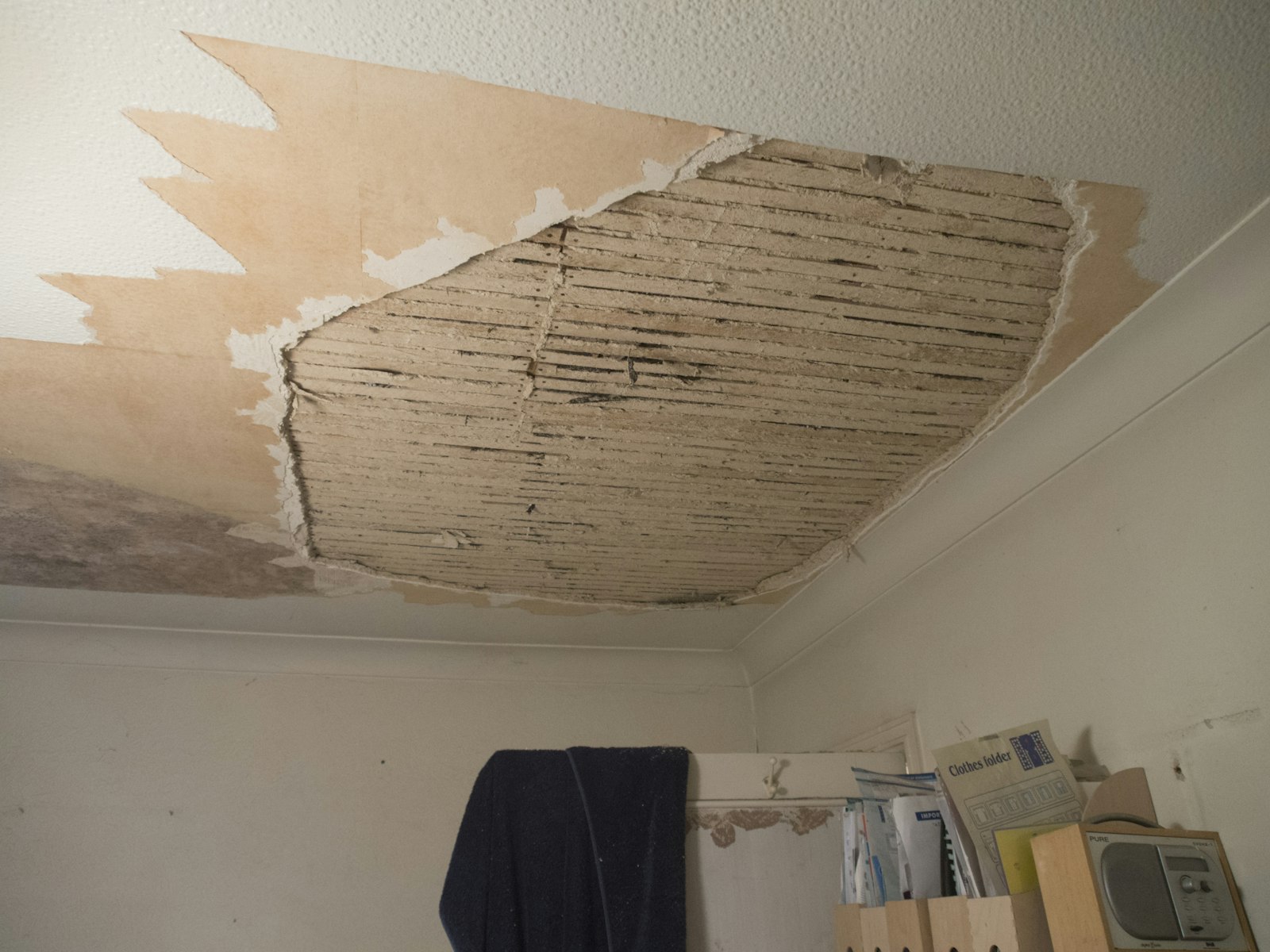
Stopping the leak at the roof is roofing work, and tarping a damaged roof belongs to a roofer. Everything under it, the wet ceiling, the attic insulation, the walls the water ran down and the floor it landed on, is what a restoration provider takes care of.
Moisture readings across the ceiling, the wall tops and the attic side show how far the water actually traveled, so the opening that gets made is the one that is needed.
Wet blown-in or batt insulation stops working and holds moisture against the framing for weeks. It comes out of the affected bay rather than being dried in place.
A lightly wet ceiling can often be dried from above. One that is sagging, stained through or holding water gets cut back to sound material instead.
Water that came through a ceiling has usually reached the wall cavity, the flooring and sometimes the level below. Those get readings too, not a glance.
Ask for photographs, readings and a list of the wet materials before anything is removed. Storm claims turn on that record more than on anything else.
Insulation, drywall, texture and paint go back once the framing reads dry. Ask the provider to quote that rebuild in writing before the work starts.
If the water made it to the floor, the sequence is the usual one: get the standing water out, then run a drying plan with readings until the materials match the dry parts of the house. A ceiling job is often drier work, but the same readings decide when it is finished.
Whether a wet ceiling, the insulation above it and the flooring below can stay is answered in the dry and restore versus replace guide. A ceiling wet for a few hours and a ceiling that has been quietly wet since a spring storm are different jobs.
A leak that ran for weeks often brings a musty smell with it, which is covered under mold remediation after water damage. If the same storm also flooded the yard or a window well, see storm and flood cleanup. Up in Woodland Park, where snow loads sit on roofs for months, ice dam leaks are a winter regular. You can request a visit by phone.
Usually not. A restoration provider handles the water damage inside the building: extraction, drying, insulation, ceilings and the rebuild. The roof itself, including emergency tarping, is a roofer's job, and it needs to be scheduled alongside the cleanup so the inside does not get wet again.
How long the leak ran, how much insulation and drywall is wet, whether the water reached walls or the level below, and how much of the ceiling has to be reopened. Ask the provider to confirm the price once readings are taken and the extent is clear.
Not until the leak is fixed and the material behind it reads dry. Paint over a wet ceiling and the stain returns, the drywall keeps softening and the insulation above stays damp, which is how a small leak turns into a mold problem.
Often weeks or months. Hail can crack or bruise shingles without an obvious hole, and the damage only lets water in once a long soaking rain or a melting snow load comes along. A ceiling stain that appears in the fall can easily start with a storm in May.
Call and describe where the water is and how long it has run so a provider can assess the job.